About Tower Tackle

A simple stacking concept refined into a responsive, skill-focused browser game with a transparent scoring and difficulty model.

Our Story

Tower Tackle started with one target: make a game that is easy to understand in seconds, but still rewarding after many rounds. We focused on timing, clean feedback, and short game loops.

The current version is optimized for quick play sessions and stable behavior across modern mobile and desktop browsers.

Our model is intentionally deterministic: input actions map directly to a predictable overlap result, which helps players learn by practice rather than guesswork.
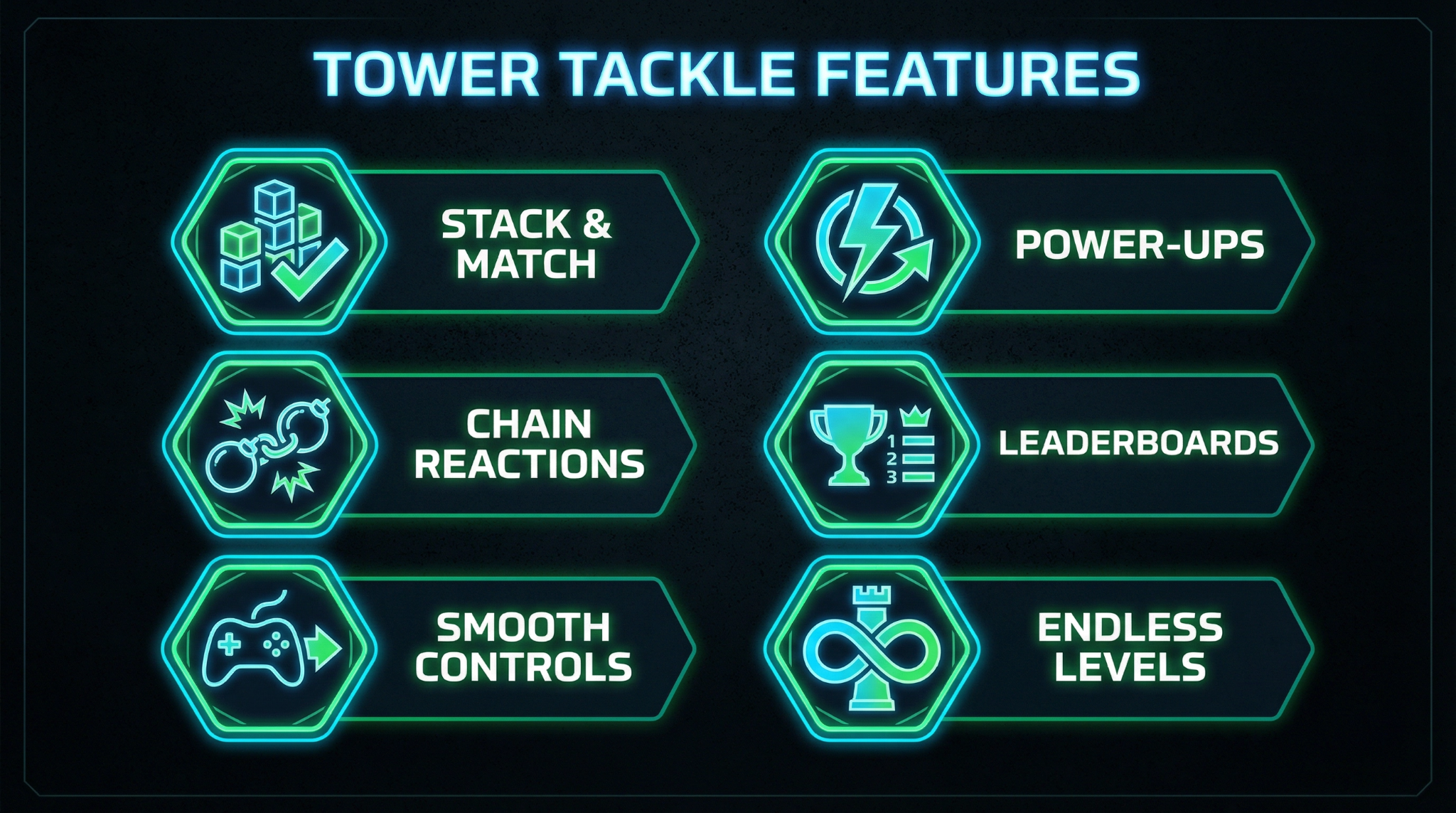
Tower Tackle design showcase

Model Philosophy

How the game model is designed for fairness, growth, and repeatability.

One Action, One Result

A drop action always triggers the same evaluation path. This keeps player feedback consistent and builds trust in the gameplay loop.

Skill Over Chance

Randomness is limited to spawn side and color variation. Score growth depends on placement precision and timing control.

Readable Difficulty

Difficulty scales through movement speed and available width. No hidden modifiers are applied to player inputs or outcomes.

Mission

Keep gameplay fair, clear, and accessible to a broad audience.

Clarity First

Every UI element should help players understand what to do next.

Fair Challenge

Scoring is skill-based and easy to verify from game behavior.

Responsible Design

General-audience content, transparent policies, and accessible navigation.

Core Values And Standards

Player Respect

Simple controls, clear navigation, and no hidden interactions.

Technical Quality

Responsive layout, smooth canvas rendering, and lightweight assets.

Transparency

Contact, privacy, cookie, and terms pages remain visible and readable.

Continuous Improvement

We iterate from real play testing across common device sizes.

Quality Checklist

What we verify before shipping updates to the model and interface.

Input Consistency

Touch, mouse, and keyboard controls are tested against the same action map.

Responsive Rendering

Canvas adapts to mobile portrait, mobile landscape, tablet, and desktop widths.

Policy Transparency

Core pages and legal pages remain accessible from every footer.

Readable Content

All model behavior is explained in plain language with no hidden logic claims.

Model Architecture Summary

High-level structure of the gameplay model used by Tower Tackle.

State Core

Core state tracks score, level, active block, stack geometry, and camera position. This state drives rendering and update behavior each animation frame.

Physics Layer

Placement physics is overlap-based. Missed segments convert to falling pieces for visual feedback while valid overlap becomes the next stack unit.

Difficulty Layer

Difficulty scales by movement speed and available width pressure. Rules stay stable so player learning transfers across runs and devices.

Interface Layer

The UI layer provides score visibility, control hints, restart actions, and responsive layout adaptation for phone, tablet, and desktop experiences.

Content And Policy Standards

How we keep static pages informative, transparent, and useful for players.

Plain Language

Gameplay and policy text is written in direct language so users can understand behavior, rights, and controls without legal ambiguity.

Page Consistency

Navigation, contact channels, and policy links remain consistent across pages so users can find key information from any entry point.

Static Reliability

Static page architecture is used for predictable performance and easier verification of visible content, links, and policy disclosures.

Ready To Play?

Jump into a round and test your timing.

Open Game